The NATALIE project established an extensive monitoring network combining continuous hydrometric probes, water sampling, and ecological surveys. The performance indicators demonstrate that nature-based infrastructure can achieve equal or superior hydraulic and environmental performance compared to traditional concrete culverts.
Several key performance indicators are estimated to assess the NBS's performance in improving water quality, reducing pollutant loads, and delivering environmental, social, and economic benefits. The assessment combines hydraulic and water quality modelling with a monitoring programme to evaluate both the system’s technical performance and its impacts and co-benefits.
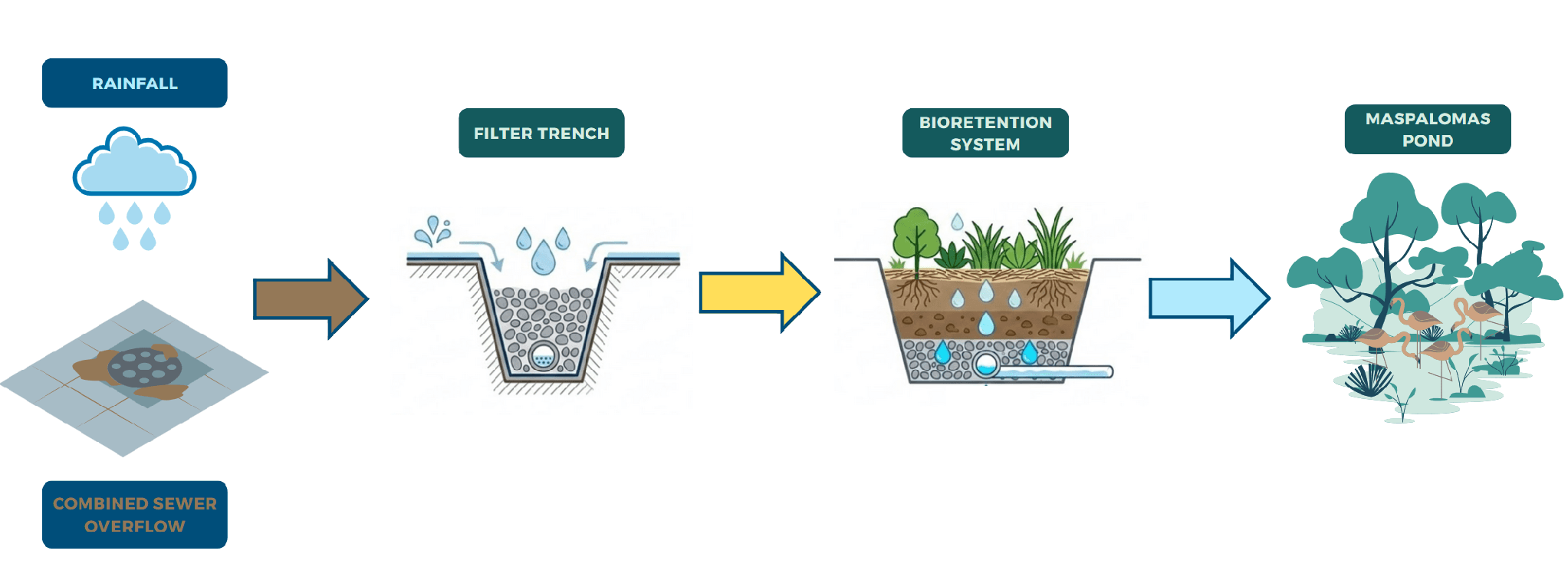
The SUDS treats a mixture of water from Combined Sewer Overflows (CSOs) and surface runoff from Oceanía Street. Monitoring is used to assess the total suspended solids (TSS), organic matter (BOD and COD), nutrients, and heavy metals removed by the bioretention system. Pollutant removal efficiencies are compared with reference values reported in the scientific literature and SUDS design guidelines, which indicate removal efficiencies ranging from 70% to 89% for total suspended solids, nitrogen, and phosphorus. For organic matter, the constructed wetland operates within the recommended loading range of 20–40 g BOD/m²/day. The information generated provides a valuable knowledge base for the design, sizing, and optimization of similar future interventions.
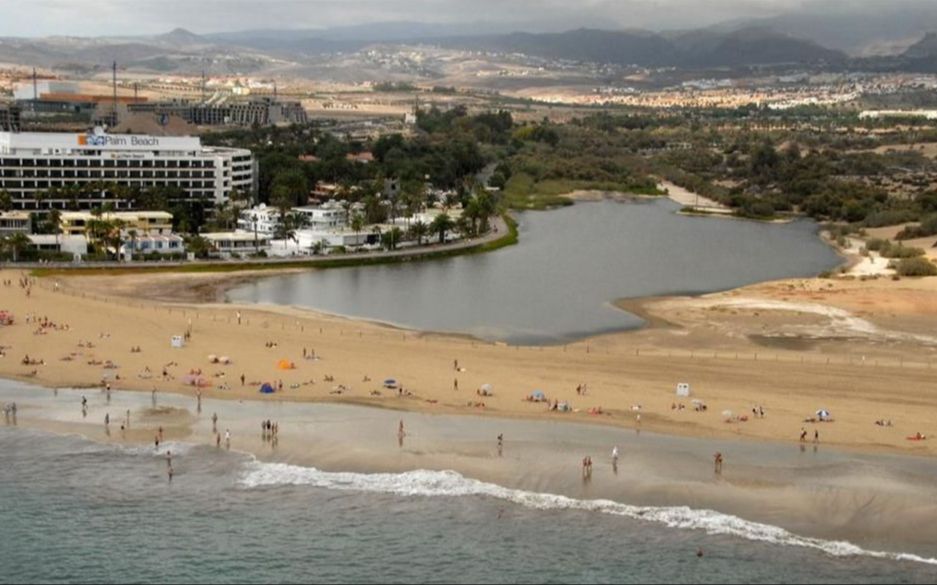
The system also provides approximately 115 m³ of storage capacity, enabling the retention of rainfall events with a return period of more than five years. This capacity reduces the volume of water entering the drainage network, improves local hydraulic management, decreases water accumulation in the lowest areas of Oceanía Street, and reduces the pollutant load reaching the Maspalomas Lagoon. The total reduction of pollutant discharge to local waterbodies is being assessed.
The environmental performance of the NBS is assessed through indicators related to ecosystem quality and biodiversity. Monitoring includes the changes in bird populations associated with the bioretention area and will track the number of plant species as a biodiversity indicator. In addition, the establishment and resilience of the planted vegetation are evaluated to identify the species best adapted to local conditions. The monitoring programme also includes a specific indicator on the presence and evolution of invasive species to assess their influence on ecosystem development. Additional environmental co-benefits include a localized reduction in the urban heat island effect resulting from increased vegetation cover.
From a social perspective, the new green infrastructure improves the environmental quality of the surrounding area and enhances residents' well-being by increasing the perception of the space as a more pleasant, accessible, and restorative environment (Check WP2 indicators).
From an economic perspective, the solution has contributed to reducing the costs associated with cleaning operations following Combined Sewer Overflow (CSO) events. These benefits were assessed using the indicators presented below in the Making the Economic Case for Nature section, which also provided the basis for the multi-criteria analysis developed within the project.
The performance of the implemented solution was also assessed under different climatic scenarios. ++++ (which scenarios, summarised final outcome). The results show that the NBS maintains its capacity to improve water quality, increases the resilience of the urban drainage system and represents a technically feasible and replicable solution for implementation in other areas of Maspalomas and across the rest of the island.